ECO-DESIGN / RECYCLED POLYESTER / DOPE DYEING
Polyester, made from the chemical (not energy) by-products of petroleum, is used in several of our industrial processes, particularly in textiles and heavy-duty clothing products. The CO2 impact of this material is significant and contributes to the depletion of the resources used in its manufacture. It is important to work toward our independence from fossil fuels and find solutions to the environmental concerns of sportspeople through innovation.
Explanation below of DOPE DYEING
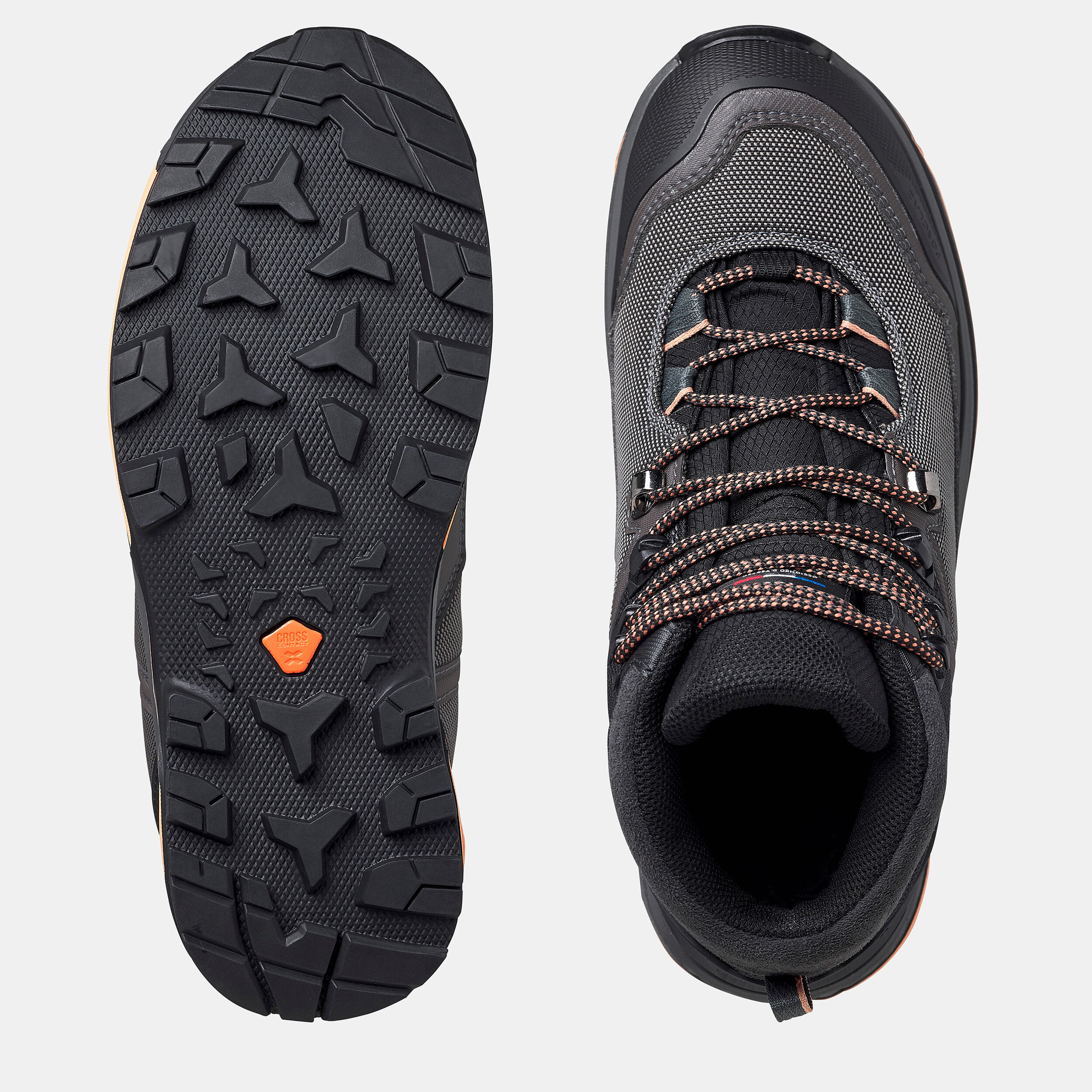
SOLE WITH GRIP
The grip of our soles is certified
To be awarded certification, the boots must pass laboratory tests to assess the grip rate on different surfaces (Smooth, Rugged, Dry, Wet). To validate these tests, we assess the quality of our soles in the field, in the mountains, by a panel of representative testers over 310 miles
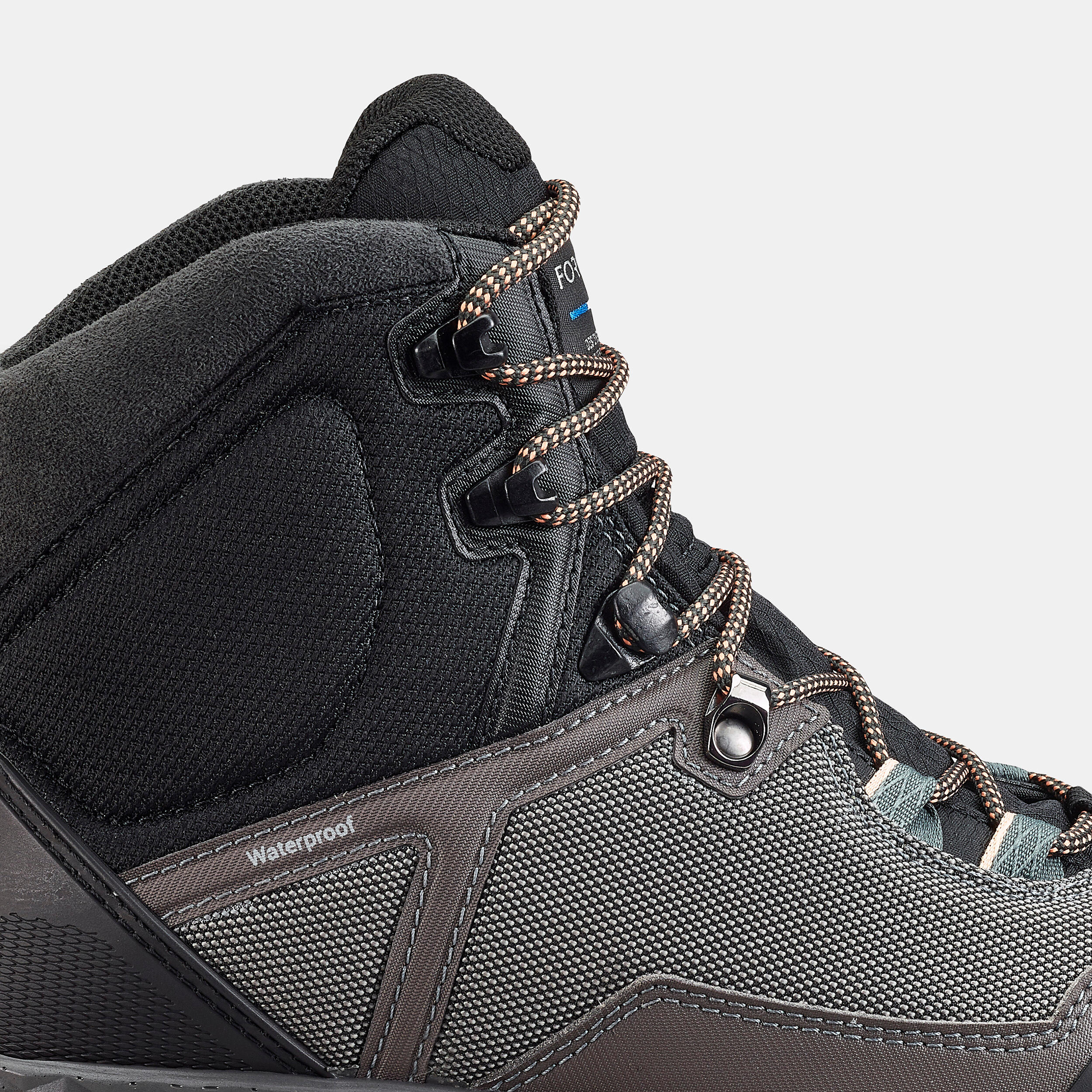
HOW WATERPROOF ARE THESE BOOTS?
This boot has been validated by a waterproofing test at 10,000 repeatable flexes, i.e. 6 miles - 3 hours of walking, in water up to the mid-upper, which today guarantees a very good level of waterproofing for your boots.
--> Our assessment indicates a LEVEL OF 2/5 giving 6 hours of waterproofing when hiking in the rain.
The details of tests carried out to assess the waterproofing of our boots is below, in the features section.
MANUFACTURING
TREK 100 boots are manufactured in the European Union, in Romania, in a factory that specializes in making backpacking boots.
This plant uses only water-based glues with no chemical solvents.
Most materials are of European origin.
MANUFACTURER: https://grisport.it/company/?lang=en
ECO-DESIGN / DOPE DYEING
Reduction of the environmental impact by dyeing directly the yarn at the source. In this bulk dyeing process we decrease the amount of water used in preparing the yarn, as the yarn is directly dyed, and not the finished fabric.
This technique saves up to 60% of water, considerably reducing the rate of CO2 emitted. with a more durable coloring of the garment. http://developpement-durable.decathlon.com/domaines-dactions/produits-services/focus-le-polyester-chez-decathlon/
Which size should I select?
For hiking, do not hesitate to buy 1 size larger than the usual size to guarantee excellent comfort on the descent and to avoid toes rubbing at the tip of the shoe. Tip: keep your toenails short and, before making your descent, check that your lacing prevents your foot from sliding toward the front of the boot.
BUYING TIPS / HOW DO YOU TRY YOUR BOOTS ON?
How to choose your boots:
1. Try on both shoes standing up and wearing the socks worn for hiking. 2. Tighten the laces correctly
3. Check the following 2 areas of comfort: the base of the heel and the front part of the foot going down. 4. Get up to walk with the boots on.
5. Try on several sizes and several models.
6. Wear your boots for increasingly long periods to wear them in
CO-DESIGN
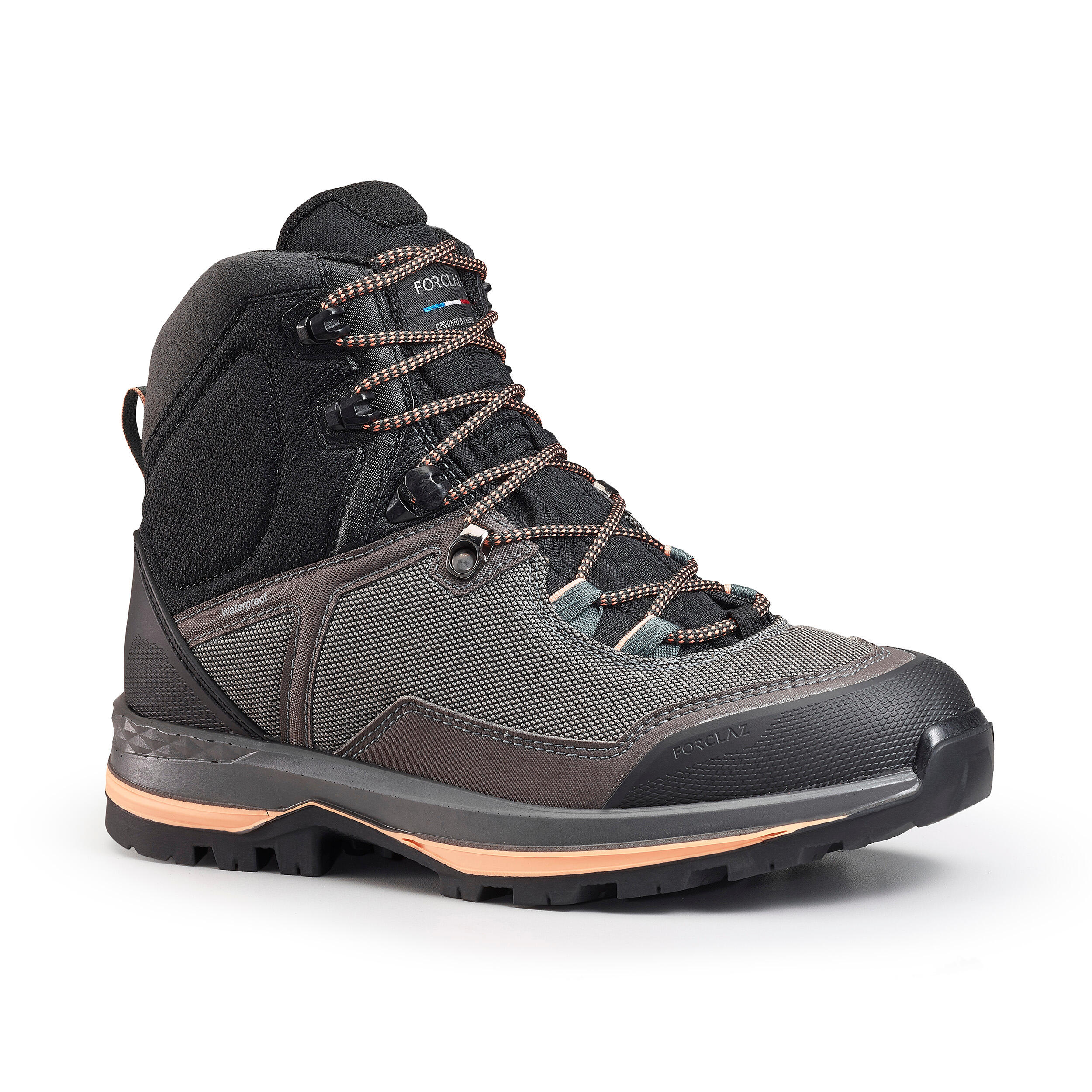
These boots were co-designed with passionate backpackers, each bringing their own special skills. For example, one of our co-designers is a chiropodist who helps us meet the physiological needs of people's feet and make sure they are comfortable and safe during treks.
5 levels of waterproofing
During the waterproofing test, we test 5 levels of waterproofing:
2,000 flexes (approximately 2.5 miles, 30 minutes of walking)
10,000 flexes (approximately 6 miles, 3 hours of walking)
30,000 flexes (approximately 9 miles, 6 hours of walking)
50,000 flexes (approximately 12.5 miles, 8 hours of walking)
100,000 flexes (approximately >12.5 miles, 24 hours of walking)
Waterproofing test
Our shoes are laboratory tested according to 2 successive tests
Test 1 / We test the efficiency of the membrane only when it is pressured and placed in water, we check the absence of water at the surface, like when you test a "punctured inner tube.
Test 2 / Using mechanical arms that simulate walking, the entire boots are half immersed in water and they complete thousands of flexes to check that the inside of the boot remains dry and it is therefore waterproof.
KNOWLEDGE OF THE SPORTING BODY
Decathlon SportsLab contributes to the innovation and design of Decathlon products, by increasing knowledge of the human body in its environment.
Our researchers explore the working and needs of sportspeople's bodies as they practice their sport.
Our experts contribute their knowledge of sports sciences, thermal comfort, morphology, and perception to the safety and well being of our sports people.
SPORTSLAB: https://www.youtube.com/watch?v=XpfMJNQSthY
Lab tests
Laboratory tests were conducted to test the following elements: - tearing of the eyelets and straps
- bonding of the sole
- toxicology
- UV resistance
- abrasion of the sole and components of the upper
- accelerated aging.
SATISFACTION OR YOUR MONEY BACK
If you do not need a new product or if it doesn't meet your sporting needs, you have 365 days to exchange it or seek a refund in all Decathlon stores.